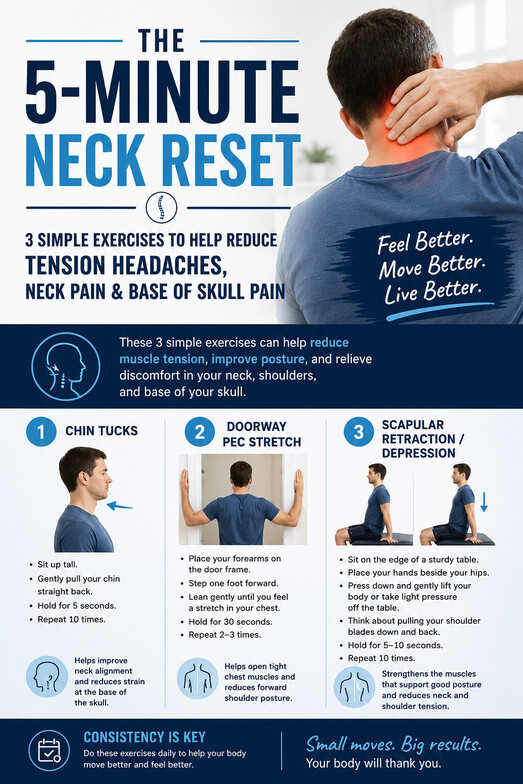
Have you ever caught yourself rubbing the back of your neck without even realizing you're doing it?
Maybe it's after a long day at the computer.
Maybe you've spent too much time looking down at your phone.
Or maybe by the afternoon, you're constantly massaging the muscles at the base of your skull because they just feel tight.
That little habit may be telling you something.
I'm Dr. Caleb Bryant, founder of Better Posture and owner of Central Chiropractic in O'Fallon, Missouri.
One of the most common things I hear is:
"My neck just always feels tight."
Or:
"I get headaches that seem to start right at the base of my skull."
One possible contributor is something many of us do for hours every day:
Holding our head and upper body in essentially the same position.
When you're working at a computer, driving, or looking down at a phone, certain muscles around the neck and shoulders can end up working overtime.
Eventually, they get tired.
They get tight.
And your neck can start feeling like it constantly needs to be stretched or massaged.
That's why I put together this simple routine.
It takes about 5 minutes and focuses on three areas that are especially important for people who spend a lot of time sitting, working at a computer, or looking at screens.
Let's get started.
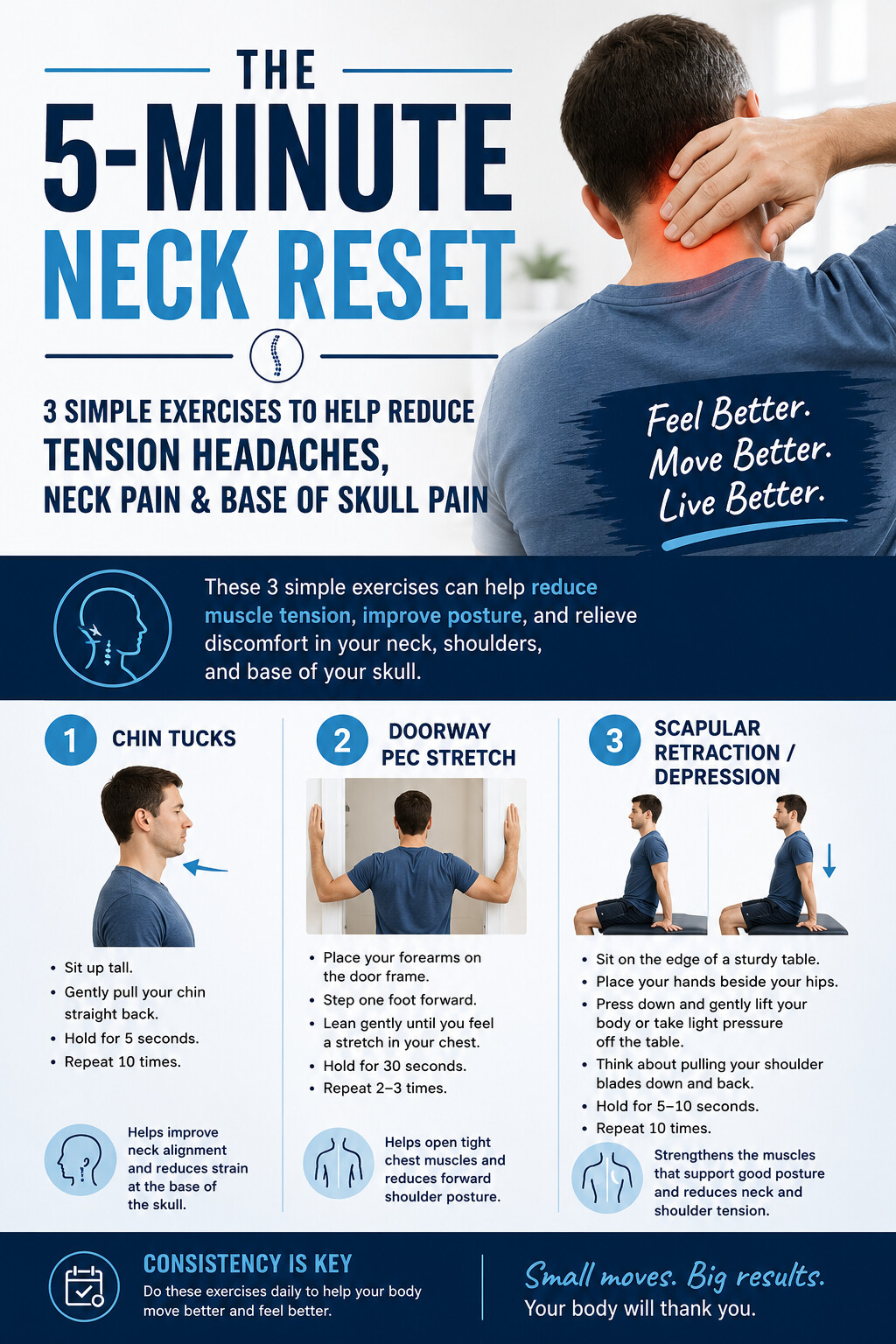
Exercise #1: Chin Tucks
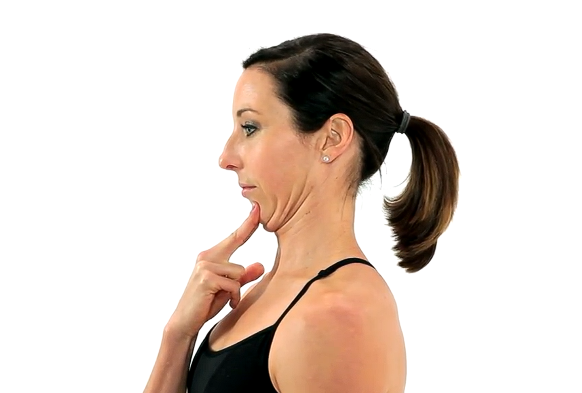
What we're trying to accomplish
When the head spends hours drifting forward, the muscles around the back of the neck can end up doing extra work.
The chin tuck is a simple movement designed to bring the head backward over the shoulders and activate the deeper muscles in the front of the neck.
How to do it
-
Sit or stand tall with your eyes looking straight ahead.
-
Keep your head level.
-
Gently draw your chin straight backward, almost as if you're trying to make a double chin.
-
Don't look down toward the floor.
-
Hold the position for about 5 seconds.
-
Relax and return to your starting position.
Repeat for 8–10 repetitions.
What should you feel?
This should be a gentle movement.
You may notice a mild stretch or lengthening sensation around the back of your neck.
You shouldn't be aggressively forcing your chin backward.
Think: glide backward—not look downward.
Exercise #2: Doorway/Wall Corner Pec Stretch
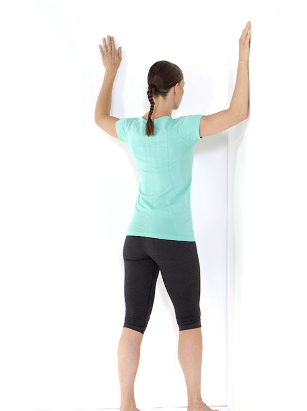
Why are we stretching the chest during a neck routine?
Because your neck doesn't work by itself.
When you spend hours typing, driving, or using your phone, the shoulders can gradually drift forward.
The muscles across the front of the chest can become tight, which can make maintaining a more upright position feel difficult.
Opening the chest gives the shoulders more freedom to move into a comfortable position.
How to do it
-
Stand in an open doorway.
-
Place your forearms against the sides of the door frame.
-
Keep your shoulders relaxed and away from your ears.
-
Take a small step forward.
-
Gently lean your body forward until you feel a comfortable stretch across your chest and the front of your shoulders.
-
Don't force the stretch.
Hold for approximately 20–30 seconds.
Relax.
Repeat 2–3 times.
One important tip
More isn't always better.
You don't need to force yourself as far through the doorway as possible.
You're looking for a comfortable stretch across the chest, not pain in the shoulders.
Exercise #3: Scapular Retraction & Depression
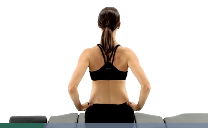
This may be the most important exercise of the three.
Why?
Because stretching alone isn't the entire answer.
We also want to wake up the muscles that help support the shoulder blades and upper body.
Here's how I like to perform it
Sit on the edge of a sturdy table or bench with your hands beside your waist.
Keep your arms relatively straight.
Now press your hands gently downward into the table.
As you do that, think about moving your shoulder blades:
DOWN and BACK.
You should feel the muscles around and underneath your shoulder blades begin to activate.
Keep your neck relaxed.
Don't shrug your shoulders toward your ears.
Hold for approximately 5 seconds, then relax.
Repeat for 8–10 repetitions.
If taking weight through your hands isn't comfortable, simply practice the downward pressure and shoulder-blade movement without trying to lift or unload your body.
Remember this cue:
Shoulders away from the ears.
We want the muscles supporting the shoulder blades doing the work—not more tension building in the neck.
Put It Together: Your 5-Minute Neck Reset
Here's the entire routine:
1. Chin Tucks
8–10 repetitions with a 5-second hold.
2. Doorway Pec Stretch
20–30 seconds, repeated 2–3 times.
3. Scapular Retraction & Depression
8–10 controlled repetitions.
That's it.
You don't need an hour.
You don't need complicated equipment.
And you don't need twenty different exercises.
The goal is simply to give your body a few minutes of movement after spending hours in the same positions.
The Bigger Lesson
Here's the part I really want you to understand.
Better posture isn't just about reminding yourself to sit up straight.
You can pull your shoulders back.
You can straighten your neck.
You can set reminders on your phone.
But if your body doesn't comfortably move into and support that position, you're probably going to fall right back into your old posture.
That's why I believe we need to think about posture differently.
Instead of constantly asking:
"How do I force myself to sit straighter?"
Start asking:
"What does my body need in order for better posture to feel easier?"
Mobility matters.
Muscle activation matters.
Strength matters.
And consistency matters.
That's the philosophy behind Better Posture and my Upper Spine Reset program.
We're not trying to create a perfect posture that you have to hold all day.
We're trying to help the upper body move better and become more capable of supporting healthier positions.
Start with these three exercises.
Give yourself five minutes.
And most importantly...
Be consistent.
Small movements performed regularly can be much more useful than one giant stretching session every few weeks.
Move better.
Feel better.
And stay active for life.
— Dr. Caleb Bryant
Founder, Better Posture
Owner, Central Chiropractic
O'Fallon, Missouri
These exercises are general educational information and aren't intended to diagnose or treat a specific condition. Stop an exercise if it causes significant or worsening pain, dizziness, numbness, weakness, or other concerning symptoms, and seek appropriate medical evaluation for severe, unusual, or persistent headaches or neck pain.

Caleb Bryant
Contact Me%20-%202026-07-23T164307.914.jpg)