%20-%202026-07-23T164307.914.jpg)
If your neck aches by mid-afternoon, your upper back feels like a permanent knot, or you catch yourself slumping forward at your desk without realizing it, you might be dealing with tech neck.
It sounds like a buzzword, but the mechanics behind it are very real. And for a lot of people in O'Fallon, it's quietly becoming one of the main reasons their neck and upper back hurt on a daily basis.
Here's what's actually happening, what it does to your body over time, and what you can do about it.
What Is Tech Neck?
Tech neck is the informal name for the neck pain and postural strain that develops from spending extended time looking down at phones, laptops, and screens. The more clinical term is forward head posture, which describes exactly what it looks like: your head drifting forward in front of your shoulders instead of sitting directly above them.
Your head weighs around 10 to 12 pounds in a neutral position. For every inch it shifts forward, the effective load on your cervical spine roughly doubles. By the time your head is a few inches forward, which is typical for most people staring at a phone, your neck muscles and spinal joints are managing the equivalent of 40 to 60 pounds of force.
Hour after hour, day after day, that adds up fast.
Tech Neck Symptoms: What to Watch For
Tech neck doesn't always announce itself as neck pain right away. The early signs are often subtle, and by the time most people recognize what's happening, the pattern is fairly well established.
Common tech neck symptoms include:
- Chronic stiffness or aching at the base of the skull and upper neck
- Tightness across the shoulders and upper back
- Headaches that tend to start at the back of the head and move forward
- A visible forward lean when you see yourself in photos or a mirror
- Fatigue in the neck muscles, especially by the end of the day
- Reduced range of motion when turning your head
If any of those sound familiar, you're not imagining it. And you're not alone.
What Forward Head Posture Does to Your Spine Over Time
This is where it gets important. Tech neck isn't just a discomfort issue. Left unaddressed, forward head posture creates a cascade of problems that go well beyond the neck.
When the head consistently sits forward, the muscles at the back of the neck have to work overtime just to keep it upright. They never fully get to rest. Over time, those muscles become chronically shortened and tight, while the muscles at the front of the neck weaken from underuse.
The joints in the cervical spine, particularly in the mid and lower neck, start bearing load in ways they weren't designed to handle. This accelerates wear on the discs and facet joints and is one of the reasons people in their 30s and 40s are presenting with degenerative changes that used to be more common in older patients.
There's also a postural ripple effect: forward head posture typically rounds the upper back, tightens the chest, and shifts the pelvis. What starts as a neck issue often contributes to mid-back pain, shoulder tension, and even jaw discomfort.
How to Fix Tech Neck: What Actually Works
The good news is that forward head posture is correctable, especially when it's caught early. A few approaches that genuinely help:
Adjust your screen height. The top of your screen should be roughly at eye level. Most people have their phones and laptops well below that, which forces the head forward to look down.
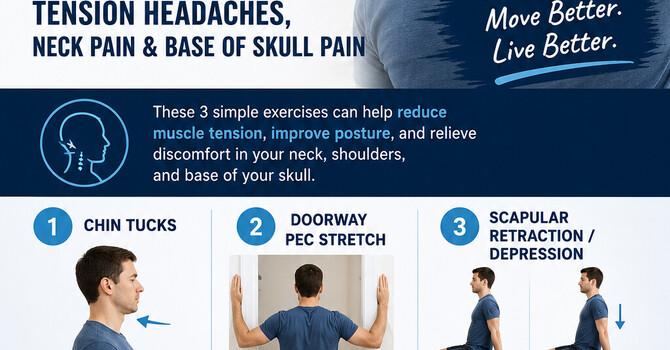
Chin tucks. One of the most effective exercises for reinforcing neutral head position. Gently draw your chin straight back (not down), hold for a few seconds, and repeat 10 times. Do them a few times a day.
Strengthen the deep neck flexors. These are the muscles along the front of your cervical spine that help hold your head in the right position. They tend to weaken with forward head posture and rarely strengthen on their own without targeted work.
Take movement breaks. Sitting static for hours is part of what allows tech neck to develop in the first place. Getting up, resetting your posture, and moving your neck through its full range every 45 to 60 minutes makes a real difference over time.
These habits help. But they're much more effective once the underlying joint restriction is addressed.
When to See a Chiropractor for Tech Neck
If exercises and postural adjustments aren't making a dent, or if your symptoms have been building for months rather than weeks, that's a signal the cervical spine needs hands-on assessment.
Here's why: when the joints of the upper and mid cervical spine lose normal motion, they don't restore it on their own. Stretching the muscles around a restricted joint helps temporarily, but it doesn't fix the restriction. That's the piece that requires chiropractic care.
At Central Chiropractic in O'Fallon, Dr. Caleb Bryant evaluates the full picture: where the head is sitting relative to the shoulders, which joints are restricted and which are compensating, and what the surrounding muscles are doing. From there, he delivers specific adjustments to restore motion in the cervical spine, paired with corrective exercises to retrain the posture pattern that caused the problem.
The goal isn't just getting you out of pain. It's helping your body hold better alignment on its own so you're not back in the same spot three months from now.
Tech Neck Is Common, But It Isn't Inevitable
Screens aren't going away. But the postural strain that comes with them doesn't have to be a permanent part of your life.
Whether you're noticing the early signs or you've been dealing with chronic neck tension for years, the sooner you understand what's driving it, the easier it is to correct.
If you're in O'Fallon and want to find out what's actually going on with your neck, book an appointment with Dr. Bryant at Central Chiropractic. A thorough evaluation will tell you exactly where the dysfunction is and what it'll take to fix it.